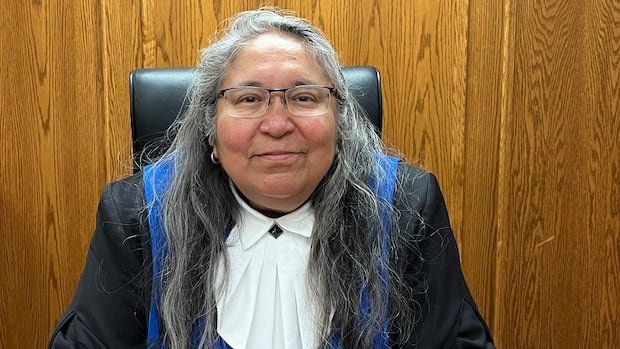
In the Estevan, Saskatchewan area, Judge Michelle Brass observed individuals bringing their own eagle feathers to court as the courthouse typically only offered religious texts for swearing-in ceremonies. Recognizing the need for ceremonial items, Brass and her sister donated 14 eagle feathers to the provincial court system to be used during oath-taking ceremonies.
For Brass, who hails from the Peepeekisis First Nation in the Treaty 4 territory of Saskatchewan and is of Saulteaux descent, this initiative maintains the core principle of oath-taking while accommodating a broader range of individuals. The donation, made in honor of her late father, Gregory Campbell Brass, signifies a commitment to truth, respect, and justice.
Eagle feathers hold significant symbolism across Indigenous communities, particularly for Saulteaux people like Judge Brass, representing a connection to higher truths and spiritual beliefs. Thirteen provincial court locations in Saskatchewan will now have eagle feathers available for oath-taking ceremonies, fostering inclusivity and respect for diverse cultural practices.
Dorthea Swiftwolfe, the City of Saskatoon’s Auntie Advocate, emphasizes the profound importance of the eagle feather in her work, symbolizing resilience, remembrance, and the pursuit of justice. She hopes that the presence of eagle feathers in courtrooms will enhance inclusivity and recognition for Indigenous families and communities.
Audrey Armstrong, Truth and Reconciliation Coordinator for the City of Saskatoon, underscores the significance of incorporating Indigenous symbols like eagle feathers into institutional settings as a step towards reconciliation. While acknowledging progress, she emphasizes the need for sustained efforts to address systemic challenges and promote genuine reconciliation.


