House prices are expected to see gradual growth in the upcoming year following a recent slowdown, as per industry experts. Data released by the Halifax, a mortgage lender, reveals that average property prices experienced minimal growth in November, inching up by just £138 to reach a new high of £299,891 and approaching the £300,000 milestone.
Economists attribute this sluggish growth to uncertainties surrounding the Budget, leading to reduced demand. However, with the possibility of a Bank of England rate cut in the near future, analysts anticipate a resurgence in price growth by early 2026.
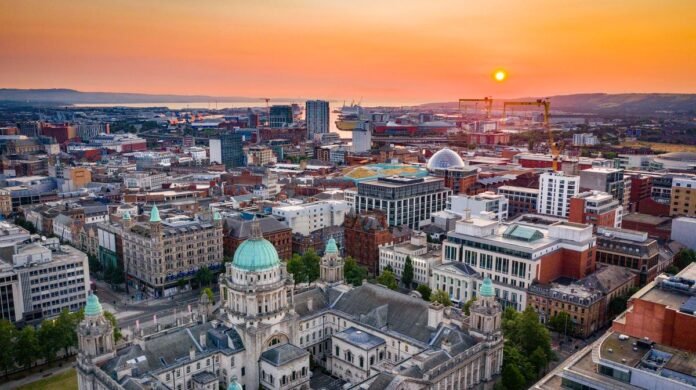
While national prices remained stable overall, regional disparities were evident, with Northern Ireland witnessing a significant surge of nearly 9% in property prices year-on-year, reaching £220,716. Conversely, Greater London continued to struggle with a 1% decline in average prices to £539,766 last month.
The annual price growth rate across the UK slowed notably in the past month, dropping from 1.9% to 0.7%. Amanda Bryden, head of mortgages at the Halifax, noted that this was the weakest growth rate since March 2024, largely influenced by the stronger growth seen the previous year.
She added that despite recent changes like the stamp duty modifications and pre-Budget uncertainties, property values have held steady. This slower growth may disappoint current homeowners but presents favorable conditions for first-time buyers, with affordability reaching its highest level since late 2015.
Looking ahead, Bryden expects a gradual increase in property prices through 2026, given the stable market conditions and anticipated further interest rate cuts.
In November, Scotland recorded annual house price growth of 3.7%, with average property values standing at £216,781. Meanwhile, Wales saw a 1.9% increase in property values, reaching £229,430 annually. In England, the North West boasted the highest annual growth rate of 3.2%, with property prices averaging £245,070. Despite its decline, London remains the most expensive region in the UK.
Industry experts, including Jason Tebb from OnTheMarket and Iain McKenzie from The Guild of Property Professionals, highlighted the regional variations in the housing market’s performance, emphasizing supply levels and affordability challenges.
Mortgage expert Karen Noye from wealth manager Quilter pointed out that post-Budget clarity has provided borrowers with a clearer outlook for early 2026, although affordability remains a key concern amid global economic pressures.
Sarah Coles, head of personal finance at Hargreaves Lansdown, expressed that house prices have been stagnant, with a meager 0.7% rise over the year, mainly due to economic uncertainties and labor market conditions. However, she remains cautiously optimistic for a potential uptick in the market in the new year, driven by potential rate cuts and falling mortgage rates.