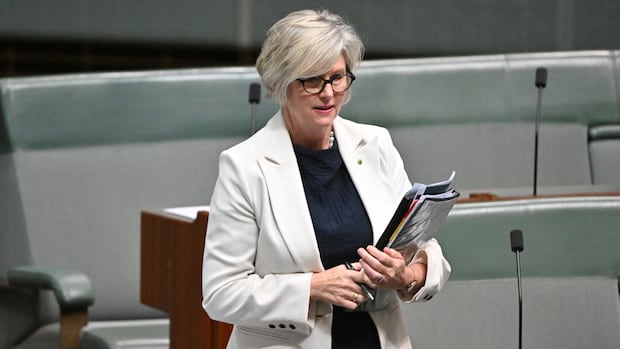
Helen Haines, the Australian politician who had both legs amputated following a hit-and-run incident, announced on Monday that she has been released from the hospital and is now concentrating on her rehabilitation process.
In her first public remarks since the SUV incident on October 19, Haines expressed, “This is a truly uplifting moment.” She also conveyed her gratitude for the numerous heartfelt messages and well-wishes she has received from people across Australia and internationally.
“These messages are providing me with strength as I embark on this next stage of recovery,” she stated.
The 65-year-old lawmaker was airlifted to a medical facility after being struck by a vehicle outside her office in Wangaratta, Victoria, last month. Surgeons were compelled to amputate both of her legs due to the severity of her injuries.
-
Australian MP loses both legs after alleged vehicle attack as suspect appears in court
-
Man charged in vehicle attack on Australian MP
Brendan Nugent, a local from Tarrawingee within Haines’s electoral district, faces three charges related to the incident: dangerous driving resulting in serious injury, intentionally inflicting serious injury, and assaulting a public official.
During a court proceeding in October, the defense attorney for Nugent noted that his client is dealing with some mental health issues and is also undergoing treatment for a concussion, as reported by the Australian Broadcasting Corporation.
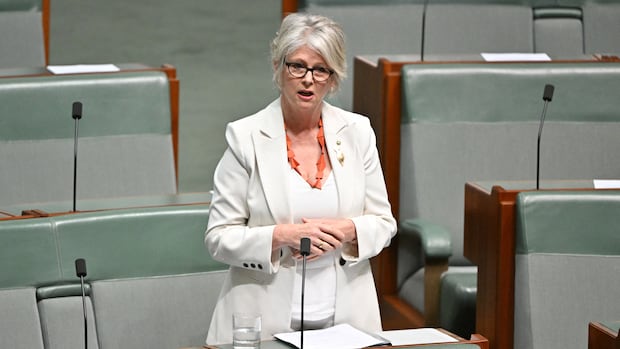
Haines, an independent member of Parliament, was elected in 2019 to represent the rural constituency of Indi, a position she successfully maintained in the 2022 and 2025 elections.
Incidents of violence against politicians are uncommon in Australia, where federal and state lawmakers, as well as prime ministers, can often be seen engaging in everyday activities such as shopping or attending community gatherings with minimal security.
Nevertheless, concerns regarding the safety of politicians have escalated in recent years due to increasing polarization, online harassment, and threats directed at elected officials, leading to demands for enhanced security measures while striving to maintain the accessibility that has long defined Australian political culture.