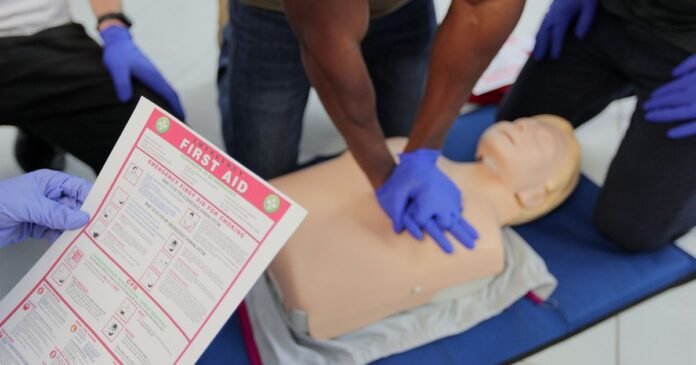
An unsettling study has uncovered that a significant portion of the population hesitates to perform CPR on women due to concerns about touching their chests. The study also indicates that 33% of men fear being accused of inappropriate behavior when administering chest compressions.
In a survey conducted by St John Ambulance among 1,000 adults in the UK, it was revealed that some individuals admitted they would hesitate to provide life-saving CPR to women in distress.
St John Ambulance has emphasized that this reluctance based on sexual taboos puts women at a higher risk of death from cardiac arrest. The charity asserts that irrespective of gender, CPR should be administered equally to all individuals in need.
Although it is the year 2025, the charity had to emphasize that “Every body is the same” and that gender should not be a barrier to providing CPR. Previous studies have shown that women are less likely to receive bystander CPR compared to men.
St John Ambulance is advocating for widespread CPR training, emphasizing that the procedure should be performed the same way on both men and women. It questions why women should have lesser chances of survival just because of their anatomy.
The survey results also revealed that a significant number of individuals, particularly men, are uncomfortable using a defibrillator on women due to the need to expose the chest for pad placement.
Utilizing a defibrillator within the first three minutes of a cardiac arrest can significantly increase survival rates by up to 70%.
The survey highlighted that a considerable percentage of respondents expressed reluctance to administer CPR to women in public settings. However, most agreed that with proper support and training, their confidence in performing CPR would improve.
It is crucial to address these misconceptions and fears surrounding administering CPR to women. Gender should not hinder the willingness to save a life. Touching a stranger to perform life-saving measures should not be seen as inappropriate, and the focus should be on saving lives without hesitation.

