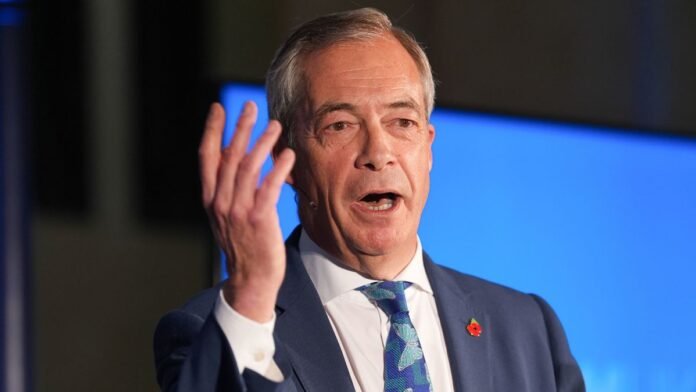
Nigel Farage faced criticism for advocating a reduction in public spending, with accusations of promoting austerity measures. During a speech in London, the Reform leader omitted support for the pensions triple lock, expressed skepticism about the minimum wage for young individuals, and pledged to decrease welfare expenditure. He abandoned his proposed £90 billion tax cuts following criticism from economists.
Following the speech, Farage was swiftly criticized for presenting an “incoherent saloon bar budget” that would allegedly favor hedge funds and financial speculators over workers. A spokesperson for the Labour Party condemned Farage’s plans, accusing him of endorsing austerity policies that would harm public services and neglecting to rule out any specific cuts.
Reform’s agenda includes significant reductions in public spending, potentially affecting the NHS, education, and pension schemes, while scrapping infrastructure investments by the Labour government. Farage’s reluctance to commit to upholding the pensions triple lock if elected raised concerns among critics.
The Reform UK party outlined intentions to significantly reduce the welfare budget and scale down the public sector, with plans to reassess all disability claims in person. Farage’s controversial proposal to eliminate Personal Independence Payments for individuals with anxiety was met with strong criticism.
Moreover, Farage reiterated his opposition to the government’s Net Zero policies, aiming to revoke related subsidies and lower energy costs. The proposal has raised concerns about its potential impact on job sectors like electric vehicles and green steel, according to the TUC General Secretary.
Reform UK’s manifesto for 2024 includes a pledge to halve the foreign aid budget to allocate resources to tax cuts, despite the recent abandonment of the tax reduction plans. The party remains committed to reducing foreign aid spending to address educational disparities among British and Turkish teenagers.
Farage has drawn attention for proposing cuts in public spending while advocating for tax benefits for wealthy individuals. His plan to offer a “Britannia Card” to overseas tycoons to avoid UK tax obligations has sparked controversy, with critics labeling it as a scheme to facilitate tax evasion by foreign billionaires.