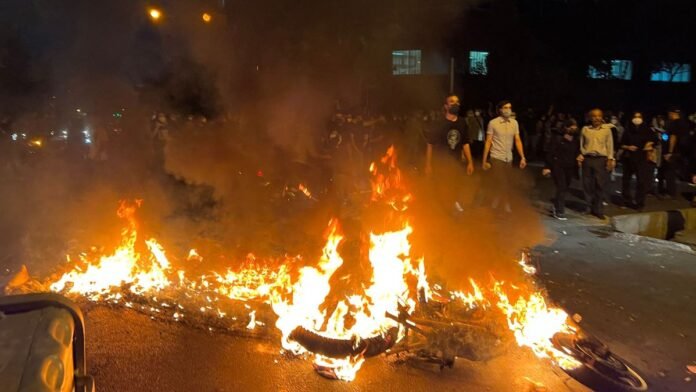
British and Western experts are cautioning that it is imperative for the international community to withdraw support from Iran to allow for a potential popular and democratic uprising against the entrenched Mullah regime that has held power since 1979.
Prominent Iranian dissidents are asserting that a burgeoning rebel movement comprising around 20,000 clandestine cells could bring about the downfall of the Islamic Republic of Iran and its enforcers, the Revolutionary Guard Corps. These dissidents believe that a revolution might be imminent, possibly within a few months.
The rebel movement is reportedly expanding rapidly, with each covert cell having approximately 10 members, and the overall number of rebel units estimated to be as high as 100,000 or more. There are indications that these rebels could potentially arm themselves if necessary.
The dissident cells operate independently, maintaining secrecy and limited communication between each other. Some sources suggest that the membership of dissident individuals, particularly within the People’s Mujahideen Organisation of Iran (MEK), has notably increased in recent times.
While the consequences of being caught by the authorities are severe, including public executions and disposal of bodies in unmarked graves, more dissidents are courageously taking to the streets to voice their opposition to the ruling regime. There are reports of weapons being smuggled into Iran to support the dissident cause.
Dr. Majid Sadeghpour, an Iranian exile residing in the US and the political director of the Washington-based Organisation of Iranian American Communities, highlighted the escalating repression faced by the Iranian people as the regime struggles with political and military challenges. He emphasized the regime’s increasing reliance on oppressive measures.
The Supreme Leader of Iran, Ayatollah Ali Khamenei, holds significant authority over state affairs, the military, and the judiciary, succeeding Ayatollah Khomeini in 1989. The regime’s repressive tactics, including the suppression of women’s rights and brutal enforcement of Islamic codes, have sparked dissent and resistance.
Despite differing opinions on the popularity of rebel groups within Iranian society, Dr. Sadeghpour contends that the covert units must have grassroots support to sustain their operations. However, some experts, like Hamid Dabashi of Columbia University, suggest that there may not be a clear successor to the current regime if it were to collapse.
The ongoing situation in Iran underscores the complex dynamics of internal dissent and external pressures, with calls for international policies to address the regime’s behavior and support for the Iranian people’s aspirations for change.