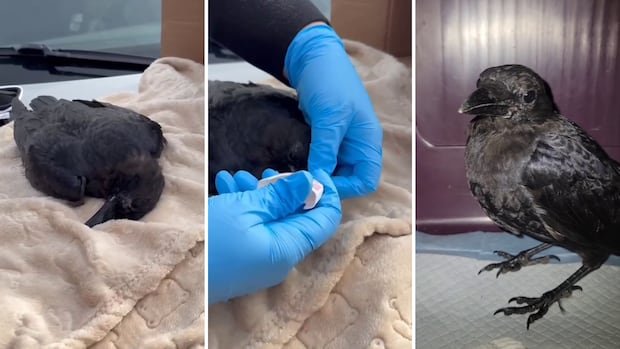
An organization dedicated to animal welfare in Prince George, B.C., has been providing nasal naloxone to crows that may have ingested harmful substances left out in downtown areas. The Good Caws Crow Rescue Society (GCCRS) has shared videos demonstrating their volunteers administering nasal naloxone to unresponsive crows, with the birds subsequently becoming alert and able to fly again.
According to Dayna Slater from GCCRS, the crows in question are concentrated in an area known for illicit drug activities. She expressed concerns about the situation, describing it as a combination of various factors creating a troubling scenario.
Slayter revealed that while they previously encountered one or two suspected drug overdoses per year, this year has seen over a dozen cases among the crows, indicating a significant increase. She described the symptoms observed in the affected crows, mentioning their unresponsiveness, closed eyes, slowed heartbeat, and the presence of a brown liquid foam from their beaks.
Although some crows did not survive, most were successfully released after recovering within 24 hours. Dr. Kaitlyn Liukaitis from Birchwood Veterinary Clinic, who treated some of the affected crows, confirmed that the symptoms align with toxic drug overdose. She mentioned that using naloxone to reverse the symptoms is a common practice in veterinary care for various animals.
The rise in toxicity in the illicit drug supply has been affecting cities across British Columbia, including Prince George, where overdose calls have surged, leading to a constant stream of sirens downtown, where the affected crows are found. Outreach groups have raised concerns about the challenges faced by individuals with addiction due to limited access to prescribed alternatives to street drugs amidst political resistance to harm reduction measures.
Slayter emphasized collaboration with harm reduction groups to identify and assist crows experiencing suspected overdoses, highlighting the importance of expired naloxone kits provided by these groups. She emphasized that the crows are not deliberately harmed but are symptomatic of broader societal issues. Proposing a solution, she suggested implementing covered garbage cans to prevent crows from accessing hazardous materials disposed of openly downtown.
Overall, the situation underscores the interconnectedness between human activities and wildlife, with the crows inadvertently affected by the substances found in their shared environment.