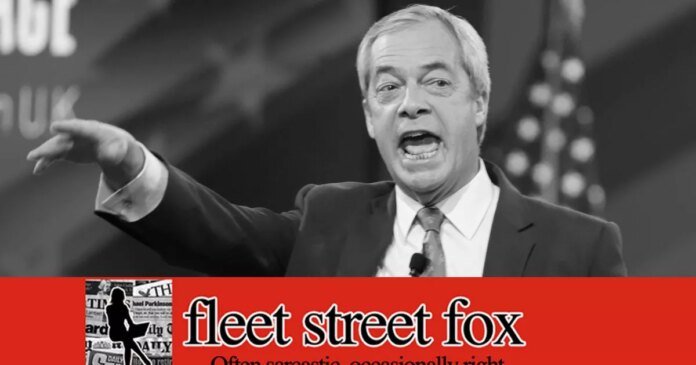
The Conservative Party has announced plans for large-scale deportations and cutting benefits for individuals with mental health issues. These proposals have stirred controversy, especially in light of recent events where a British-born man facing personal challenges engaged in a violent incident at a synagogue. Despite the potential repercussions, the Conservative Party seems determined to implement these changes, even at the expense of millions of individuals’ rights.
The driving force behind these policies appears to be a strategic move to counter the rising influence of Reform UK, led by Nigel Farage. This shift in policy direction is not solely aimed at improving safety, prosperity, or well-being but rather as a response to political dynamics and competition within the political landscape.
Farage’s presence in the political sphere seems to exert a gravitational pull, drawing attention and debate towards his controversial statements and actions. The traditional distinctions between political parties have blurred, with figures like Keir Badenoch and Kemi Starmer embodying similar characteristics, despite their party affiliations.
Nigel Farage’s influence on British politics has been divisive, with critics highlighting his inflammatory rhetoric and lack of tangible contributions. While some credit him with aspects like championing Brexit and challenging the political status quo, others argue that his methods have exacerbated societal divisions and political polarization.
Farage’s persistent negative outlook on Britain and his confrontational approach have shaped the national discourse, often leading to a cycle of pessimism and perceived inadequacies in addressing key issues. His impact on public discourse and political dynamics has raised questions about the direction of democracy and the role of public figures in shaping national conversations.
Critics point out Farage’s failure to embody British values or contribute positively to societal progress. His controversial stances and actions have fueled discontent and further polarized public opinion, leading to a climate of distrust and division.
In conclusion, Nigel Farage’s presence in British politics has left a lasting impact, shaping debates and influencing public perception. While some acknowledge his role in challenging established norms, others question the long-term consequences of his approach and the implications for democracy and social cohesion.

