Two Canadian researchers have been recognized in a worldwide image competition showcasing ecological research. The 2026 joint BMC Ecology and Evolution and BMC Zoology image competition honored 11 photos from researchers globally at different career stages. These photographs capture animals in their natural habitats, scientists and students engaged in ecological research, and various natural scenes.
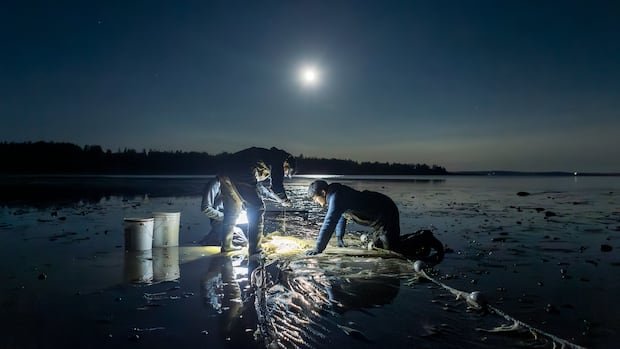
Liam Brennan, a master’s student and photographer at the University of New Brunswick (UNB), won the competition’s research in action category with his image titled “Intertidal education.” On the other hand, Allen (Haolun) Tian, a post-doctoral researcher affiliated with Queen’s University, Hangzhou Normal University, and Zhejiang University in China, secured the title in the “protecting our planet” category with his photo “A bridge between past and present.”
Photographs play a crucial role for researchers in documenting their work and providing a glimpse into the world of science. According to Brennan, these images help establish public trust in the importance of environmental education and ecological research.
Brennan’s winning image, “Intertidal education,” was taken while supervising undergraduate students conducting fish monitoring along the coast in St. Andrews, N.B. He captured the students’ curiosity as they worked under the night sky, emphasizing the value of hands-on ecological research.
Tian’s winning photo, “A bridge between past and present,” showcases the Long Sault Parkway through a composition of 33 drone photos, illustrating the impact of human activity on ecosystems. Tian believes that such images can amplify the significance of science, especially in conservation efforts.
The competition featured various other winning images, including “Window to the Wetlands” by Sritam Kumar Sethy and “A space for frogs” by Ryan Wagner. These captivating images shed light on different aspects of ecological research and emphasize the beauty and importance of ecosystems worldwide.
Photographers like Brennan and Tian aim to use their images to foster natural empathy and raise awareness about environmental conservation. By sharing their research visually, they hope to inspire others to appreciate and protect the natural world.