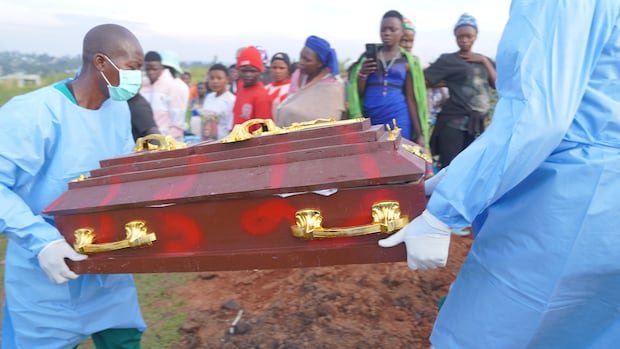
Health officials combating the Ebola crisis in eastern Democratic Republic of Congo are employing anonymized mobile phone data to track population movements and predict potential virus spread areas, as reported by the World Health Organization (WHO) and collaborating researchers. This innovative method, a first in Ebola response efforts, is crucial as authorities grapple with what WHO has labeled the swiftest-growing Ebola outbreak ever recorded. With confirmed cases in six provinces and over 6,250 individuals infected and 3,039 fatalities since the outbreak’s inception on May 15, the urgency to contain the outbreak is paramount.
The current outbreak, the 17th in Congo, is caused by the Bundibugyo strain of Ebola, for which there are no approved vaccines or treatments. Given the escalating spread of the virus, health officials are seeking predictive strategies to preempt potential outbreak zones and effectively allocate limited surveillance and response resources. Olivier Le Polain, head of epidemiology and analytics for WHO’s Health Emergencies Programme, emphasized the critical role of population movements in outbreaks, particularly in the ongoing epidemic.
While conventional risk assessments typically target outbreak hotspots and neighboring regions, the analysis of mobility data enables responders to identify risks in geographically distant yet interconnected areas due to travel patterns. This nuanced understanding of risk is exemplified in Ituri province, where significant population movements tied to mining and trade activities are pivotal in comprehending the outbreak’s transmission dynamics.
The analysis, facilitated by Swedish non-profit Flowminder, leverages anonymized mobile phone records to estimate people’s travel patterns across different regions. Vodacom, Congo’s largest telecom operator, supplies this data at no cost, with Flowminder ensuring the anonymity and aggregation of these records to safeguard individual privacy. By predicting how infectious individuals move based on population mobility estimates, the analysis aids in anticipating and containing Ebola spread.
Initial analyses focused on areas where the outbreak originated, tracking travel patterns to neighboring regions where confirmed cases subsequently emerged. As the outbreak expanded, the analysis extended to other affected regions to pinpoint high-risk travel destinations. Notably, Kisangani, a vital transport hub linking eastern and western Congo, emerged as a focal point for heightened vigilance due to its connectivity with outbreak zones.
Recent studies underscore the interconnectedness between Kisangani, Kinshasa, and settlements along the Congo River, as well as border regions with Central African Republic and South Sudan. With the WHO emphasizing the risk of outbreak spread to Kinshasa and neighboring countries, ongoing efforts are directed at enhancing data coverage by engaging additional telecom operators to refine the analysis and enhance response operations.