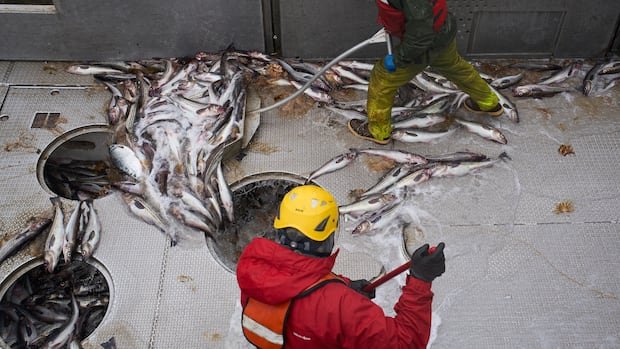
A vast haul of Alaska pollock emerged from the turbulent waters of the Bering Sea, overflowing the nets with an abundance of marine life, including salmon, crabs, jellyfish, and skate. The contentious issue of industrial trawling in Alaska has sparked a heated debate, as the bycatch of non-target species, particularly salmon, has stirred environmental and cultural concerns.
Maverick Blake, the captain of the F/V Progress, acknowledged the challenge of unintentionally catching non-target species due to the nature of wild capture fisheries. Despite the controversy, Blake emphasized the importance of providing seafood for consumption while striving to minimize impacts on the environment.
Alaska pollock, a key fishery globally, is used in popular food items like McDonald’s Filet-O-Fish sandwiches and fish sticks. While efforts are made to reduce environmental harm in the fishery, the bycatch issue remains significant, with around two percent of the total catch consisting of unintended species, including hundreds of thousands of salmon annually.
The decline in salmon populations, especially in western Alaska, has raised concerns among Indigenous communities and commercial fishers, prompting calls for stricter regulations on trawling practices. The political landscape in Alaska is also influenced by the debate, with candidates in key elections differing on approaches to address bycatch issues.
The impact of trawling extends beyond salmon to other marine life, prompting calls for better management practices and conservation efforts. While efforts are made to minimize bycatch, challenges persist in balancing economic interests with environmental conservation in Alaska’s fisheries.
The ongoing debate surrounding trawling practices reflects a broader concern over the sustainability of fisheries and the preservation of marine ecosystems. The need to address bycatch and its implications on various stakeholders underscores the complex challenges facing Alaska’s fishing industry.


