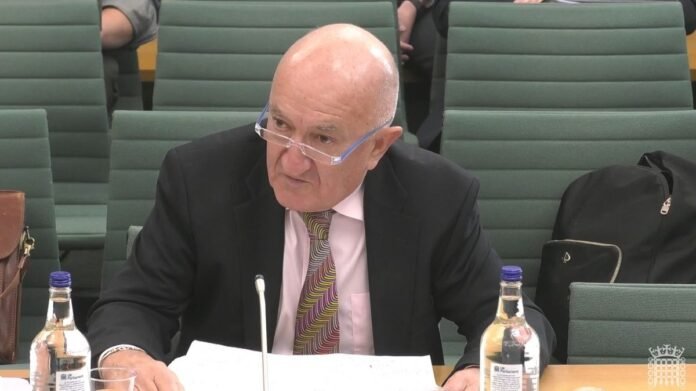
The co-founder of Paddy Power has criticized betting companies for luring inexperienced gamblers into addictive activities to boost their profits. Stewart Kenny, who served on the firm’s board for nearly three decades, alleged that the company removed initiatives intended to assist gambling addicts, prompting his departure.
During his testimony to the Commons Treasury committee, Kenny highlighted that bookmakers often entice new players with free spins for online casino games shortly after account registration. He likened this practice to being offered a stronger drink for free after finishing a mild one in a bar.
Advocating for measures to discourage bookmakers from steering individuals towards more addictive forms of gambling, Kenny supported calls for higher taxes on gambling firms in the upcoming Budget. A report commissioned by the Betting and Gaming Council warned that proposed tax increases could lead to job losses and drive billions of pounds of revenue into the black market.
Kenny emphasized the substantial increase in gambling companies’ profits and dismissed industry claims that higher taxes would drive consumers towards illegal betting options as fearmongering. Experts from the Institute for Public Policy Research echoed the need for increased taxation on gambling firms to counteract the negative societal impacts, especially on younger men at risk of addiction.
Proposals include raising remote gambling duty from 21% to 50%, machine games duty from 20% to 50%, and general betting duty from 15% to 25%, aiming to generate additional revenue. The focus is on regulating remote gambling activities rather than traditional horse racing betting.
Amid debates on the industry’s tax rates, the Betting and Gaming Council defended its practices, stating that the vast majority of customers engage in gambling responsibly. They emphasized that only a small fraction of customers encounter gambling-related problems, refuting claims of widespread social harm caused by their products.
The council expressed concerns that higher taxes could lead to reduced odds for punters, potentially driving them towards illicit gambling operators. They argued that taxing gambling activities more could alter consumer behavior, leading to unintended consequences.