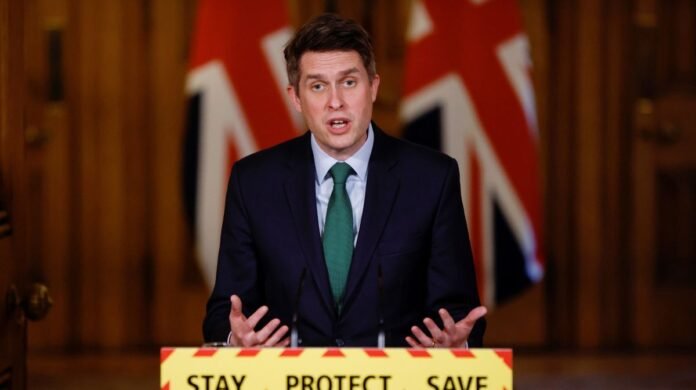
Sir Gavin Williamson criticized Boris Johnson during his testimony at the Covid-19 Inquiry. The former Education Secretary pointed out that the Government was slow in preparing schools for remote learning and often made last-minute decisions under the then-Prime Minister’s leadership. Williamson expressed regret over various errors, including the lack of readiness for school closures and remote learning, despite compelling scientific evidence indicating their necessity.
Concerns are growing about the long-term effects of children’s isolation and disrupted learning due to the pandemic. Williamson acknowledged the mistakes made both before and during the pandemic, admitting that the government failed to prioritize emerging scientific evidence. He took responsibility for the shortcomings in his department and expressed remorse for the inadequate response.
The UK implemented school closures for all except essential workers’ children and vulnerable students in March 2020, leading to challenges with remote learning, especially for families with key workers or poor internet access. Testimonies from headteachers revealed that they had started preparing for potential school closures in advance, with some taking proactive steps even before official announcements were made.
Sir Gavin highlighted that the reluctance to close schools during the initial Covid wave hindered the consultation process for effective closures. He criticized Boris Johnson for misleading the public with false hopes and inconsistent messaging, which he believed had a detrimental impact on schools, children, and parents.
The phased reopening of schools in England commenced on June 1, with subsequent reopenings in Wales, Scotland, and Northern Ireland at later dates. However, a third lockdown in England was enforced by Boris Johnson in January 2021, resulting in school closures and a shift to remote learning.
In response to the criticisms, a Government spokesperson emphasized the importance of learning from the pandemic and the Covid Inquiry’s findings to improve future planning and preparations. The inquiry continues to shed light on the decision-making processes and responses to the challenges faced during the pandemic.