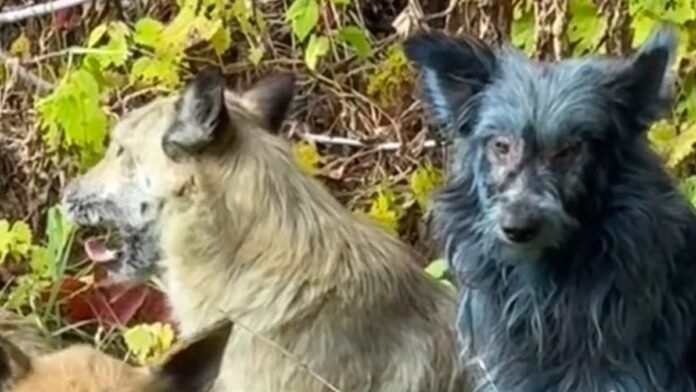
In a puzzling phenomenon, images have surfaced showing dogs with a vivid blue hue near the Chernobyl nuclear power plant, leaving people astonished. These dogs are believed to be descendants of pets abandoned in northern Ukraine following the catastrophic event nearly four decades ago. The Dogs of Chernobyl charity, which shared the striking photos, reported encountering these dogs roaming around the exclusion zone near the ruins.
Despite their unusual color, the group dedicated to caring for the strays within the 18-square-mile restricted area mentioned that the dogs appeared to be in good health. The region remains inaccessible to most individuals since the devastating explosion of Reactor No. 4 in 1986, which resulted in one of the worst nuclear disasters globally, claiming 31 lives and impacting thousands more.
The images have sparked curiosity about the surviving wildlife in Chernobyl, where animals have thrived in the absence of human presence. The blue dogs have become emblematic of resilience, with an estimated 700 of them residing in the vicinity. The charity provides medical aid and sustenance to these animals and reported discovering three hounds with vibrant blue fur during their routine checks.
In a social media post, the organization expressed their astonishment, stating, “A very unique experience we have to discuss. Chernobyl blue dogs. We are on the ground capturing dogs for sterilization and encountered three completely blue dogs. We are uncertain about the cause and are striving to apprehend them for further investigation. It is likely that they have been exposed to some form of chemical. Despite their agility, we have not succeeded in capturing them yet.”
Chernobyl has unexpectedly transformed into a sanctuary for wildlife in the aftermath of the world’s worst nuclear disaster. Following the reactor fire 39 years ago, the nearby towns were evacuated and have remained deserted ever since. Researchers have observed the reemergence of wild animals due to the absence of human interference, with wild horses, deer, and over 200 bird species thriving in the 1,600 square mile Chernobyl Exclusion Zone along the Ukraine-Belarus border.
At a recent conference, scientists studying the impact of radiation on animals shared their findings, highlighting the area’s rich biodiversity. The studies confirmed that the animal and plant populations within the exclusion zone are relatively stable, with minimal negative effects from the current radiation levels.
With over 100,000 evacuees and the establishment of the Chernobyl Exclusion Zone within a 20-mile radius of the damaged reactor, the area continues to grapple with high radiation levels. Tourists were only allowed to visit the Chernobyl Exclusion Zone in 2011, subject to stringent regulations imposed by the Ukrainian government to ensure safety and prevent unauthorized activities, with penalties including fines and potential imprisonment for violators.