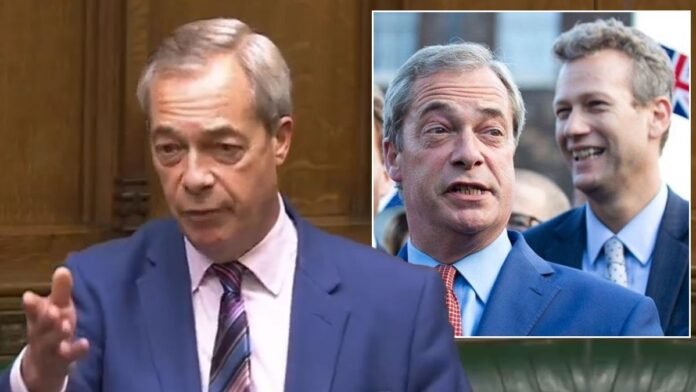
Nigel Farage faced severe criticism in Parliament regarding his associate from Reform who confessed to accepting bribes from Russia.
During a tense exchange on national security, Foreign Office minister Stephen Doughty lambasted the Reform UK leader for complaining despite Nathan Gill, a prominent figure in Reform, admitting to eight counts of bribery in support of Russia. Gill, a disgraced 52-year-old former MEP of UKIP and Brexit Party, who led Reform in Wales until 2021, is awaiting sentencing next month. Despite his wrongdoings, Gill referred to Mr. Farage as a “friend and colleague,” showcasing their longstanding association.
In a discussion concerning the Chagos Islands’ transfer to Mauritius, Farage expressed his concerns about Mauritius’ financial state and alleged Chinese involvement in the region. However, Labour minister Mr. Doughty swiftly dismissed Farage’s remarks, highlighting Gill’s bribery scandal and his alignment with Kremlin narratives blaming NATO for Russia’s actions in Ukraine.
Gill, who served as a UKIP and Brexit Party MEP from 2014 to 2020 and led UKIP Wales from 2014 to 2016, briefly led Reform UK Wales in 2021. He pleaded guilty to accepting bribes from Oleg Voloshyn, a known associate of Russian security services, and delivering speeches supporting Russian interests in the European Parliament and on television.
In a significant revelation, it was disclosed that Gill defended Ukrainian TV channels linked to Vladimir Putin’s ally, Viktor Medvedchuk, in parliamentary speeches and TV appearances. Gill facilitated MEPs to engage with these channels and collaborated with Medvedchuk in exchange for illicit payments, painting a concerning picture of his activities.
Following the legal proceedings at the Old Bailey, Commander Dominic Murphy emphasized the severity of the case, highlighting the threat posed to democratic values by individuals like Gill who advance agendas beneficial to Russian interests. Farage distanced himself from Gill’s actions, claiming ignorance of his pro-Russian activities, despite their prior association.
The unfolding events have brought to light the intricate web of political alliances and corruption, underscoring the importance of vigilance in safeguarding national security and democratic principles.

