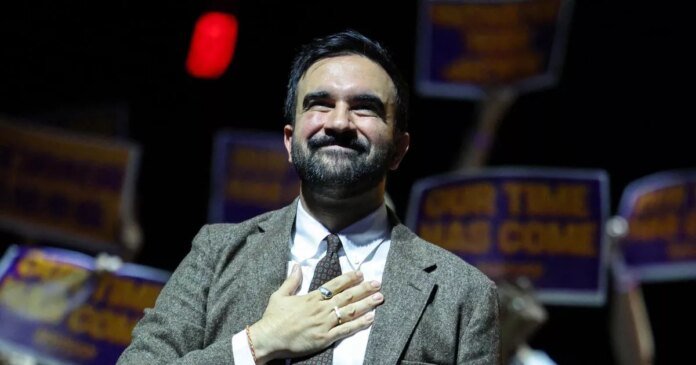
The man in the Oval Office is likely disregarding the headlines, but the message is clear: a shift has occurred. Zohran Mamdani’s election as the 111th mayor of New York signifies more than a local upset; it signals a turning point in rejecting the aftermath of Donald Trump’s presidency.
The resonance of this rejection is particularly strong in the regions Trump once boasted about—New York, New Jersey, and Virginia. Mamdani’s victory not only signifies a change in leadership but also a shift towards a new era, driven by younger voters, working-class immigrants, and marginalized communities who have historically been overlooked.
This wasn’t just a transfer of power; it was a decisive statement. Mamdani’s triumph reshaped the political landscape of New York City, marking a historic moment as the first Muslim and South Asian mayor of the city. His success showcased a winning strategy for Democrats by prioritizing the concerns of local residents over traditional power dynamics.
Similarly, in New Jersey, Mikie Sherrill secured the state’s first female Democratic governorship, while Abigail Spanberger claimed the same title in Virginia. Ghazala Hashmi’s election as lieutenant governor in Virginia made history as the first Muslim woman elected statewide in the U.S.
These victories are not mere footnotes; they are significant milestones signaling a collective stand against the status quo. Trump’s attempts to downplay the results were futile, as voters expressed their discontent with his policies, rhetoric, and divisive approach.
The recent outcomes in New York, New Jersey, and Virginia serve as a warning to the current administration—a sign of growing electoral rebellion. Though these states may not always align politically, their unified message is loud and clear: change is imminent. Trump, facing this wave of opposition, appears to be recognizing that he is no longer in control.

