The Liberal administration is suggesting modifications aimed at establishing a “guardrail” around a contentious aspect of the Labour Code. However, experts warn that even if the legislation is enacted as proposed, legal disputes will likely continue.
Section 107, which grants the minister significant authority to “maintain or secure industrial peace,” has been part of the Labour Code for many years. Since 2024, the federal government has faced criticism for utilizing this section to compel striking workers to return to work and initiate binding arbitration.
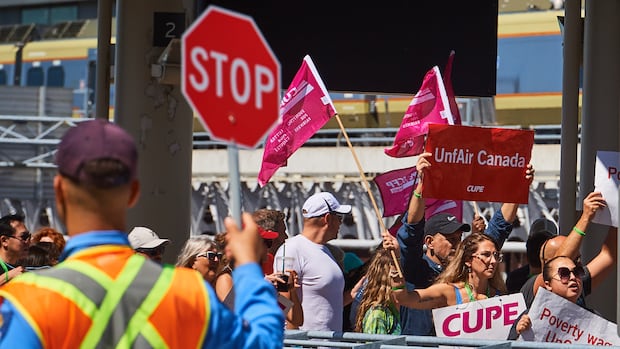
Recently, Labour Minister Patty Hajdu invoked this provision to mandate Air Canada flight attendants to resume their duties last summer. Nevertheless, the union ultimately rejected that directive, and a tentative agreement was achieved shortly thereafter.
The Canadian Union of Public Employees (CUPE), representing Air Canada flight attendants, has initiated a series of legal challenges against the government’s application of Section 107, including one that questions the constitutionality of this section of the Labour Code.
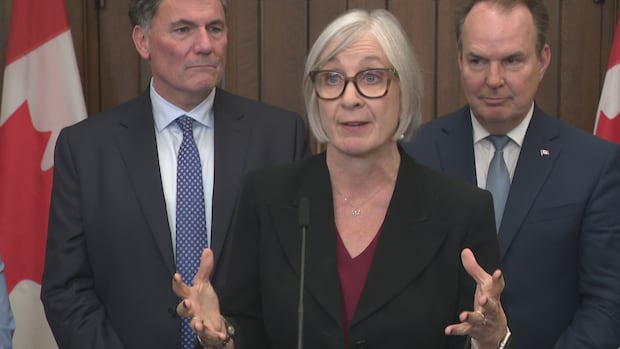
In response to a question from a journalist who indicated that the modifications to the Canada Labour Code in the omnibus bill introduced by the government on Monday could undermine the right to strike, Jobs and Families Minister Patty Hajdu asserted that the bill will ‘elevate accountability’ for both negotiating parties.
Andrea Talarico, a law professor at the University of Ottawa specializing in labor law, indicated that despite the government’s attempts to redefine Section 107’s scope, the issue of whether it can infringe upon the right to strike will “certainly” be brought before the Supreme Court.
“In this scenario, where we face significant controversy that impacts Charter rights amidst economically challenging times, this matter will necessitate Supreme Court intervention for clarification,” she stated.
On Monday, the government presented Bill C-39, an omnibus bill that proposes alterations to the application of Section 107. If it passes, the minister would need to declare that a strike poses a detrimental impact on the “national interest” and would have to take into account a report from a newly appointed mediator assigned to outline the positions of both parties.
Prime Minister Mark Carney stated on Tuesday that the bill “definitely strengthens the right to strike.”
However, the Canadian Labour Congress (CLC) began vocally opposing the proposed adjustments even before the bill was formally presented.
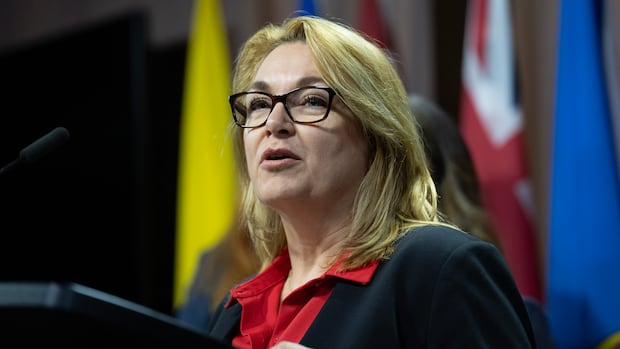
While addressing reporters regarding the new major projects bill from the Liberal government, Canadian Labour Congress president Bea Bruske mentioned that although Canada’s workforce is eager to assist in the U.S. trade conflict, ‘we cannot face Trump with our hands tied behind our backs at the bargaining tables.’
Mark Rowlinson, a legal expert associated with the CLC, informed reporters on Tuesday that the new legislation represents “the clearest possible breach” of the Charter and that the bill “bypasses” ongoing legal actions related to Section 107.
Nonetheless, CLC president Bea Bruske indicated that the organization is still evaluating its options on whether to initiate a legal challenge against the new legislation.
Brian Gottheil, a human resources consultant and lawyer, told CBC News that should the new legislation be enacted, the government might argue that the current court challenges have become “moot” and are no longer pertinent.
“I anticipate that the government will contend that since they have modified Section 107 and the issues being contested in the earlier version are no longer applicable, they will assert that these matters have no relevance and those cases should be dismissed,” he stated.
Gottheil mentioned that courts may consider that argument in cases where unions are contesting specific applications of Section 107 to terminate a strike. However, he noted that challenges to the law based on Charter issues will likely proceed.
-
Carney states he has a ‘very clear mandate’ to implement significant economic reforms
-
AFN chief cautions Carney against ‘misusing’ majority to advance new major projects legislation
“Canadians possess a constitutional right to freedom of association, which has been interpreted by the Supreme Court to encompass a right to collective bargaining and a right to strike,” he explained.
“The critical question is whether a relatively unrestricted authority bestowed upon the minister to direct the federal labor board to terminate strikes and lockouts — does that contravene the Constitution? I believe that this new legislation keeps that question alive.”
The Teamsters union initiated its own legal proceedings after the government invoked Section 107 to conclude a rail workers strike in 2024. Since the union is seeking damages, Talarico noted that the government’s mootness argument might not succeed.
“The courts need to assess the consequences for the unions and determine if damages can be awarded,” she stated.
The Labour Code applies solely to federally regulated sectors, such as airlines, banks, ports, and railroads. However, Talarico contended that provinces are likely monitoring how the dispute over Section 107 unfolds.