Quebecor has put forth a $31 billion offer to acquire Telus, a proposal that could significantly alter the telecommunications sector and prompt concerns regarding competition if it proceeds.
The telecom firm based in Montreal announced on Monday that it had made a non-binding offer to Telus in June, which serves as a foundation for further discussions. Telus is in the process of evaluating an improved proposal that Quebecor submitted earlier this month, as stated in the release.
According to Quebecor, the suggested acquisition would unite complementary networks, spectrum, and operational capabilities, thereby enhancing investment potential and fostering a more competitive enterprise.
The offer entails providing Telus shareholders with $6.35 in cash and 0.17 shares of Quebecor for every share of Telus they hold, representing an approximate 60 percent premium, as per the company’s claims.
Quebecor, recognized as Canada’s fourth-largest telecommunications company, has experienced a substantial increase in value in recent years following its acquisition of Freedom Mobile in 2023 via its subsidiary, Videotron, while utilizing competitors’ networks to deliver mobile services to its customers. With Quebecor’s market capitalization at $14.77 billion and Telus’s at $21.72 billion, this prospective deal could position Quebecor as larger than either Rogers or Bell based on this metric.
The company contends that acquiring Telus would result in a more robust entity capable of competing more effectively against other national and international firms while enabling better consumer services through quicker 5G implementation, improved rural connectivity, and enhanced affordability.
In a discussion with CBC News, Quebecor’s president and CEO, Pierre Karl Péladeau, indicated that a merged company would operate more efficiently, allowing Quebecor to invest in areas such as network enhancements.
“The financial resources resulting from these savings will enable us to reduce our debt and invest in our networks, including non-terrestrial networks,” stated Péladeau.
The company indicated in its release that it intends to preserve the Telus brand if the deal moves forward.
Montreal-based wireless provider Quebecor has made a $31-billion bid to take over Vancouver-based Telus — a move experts say would make the market less competitive and potentially affect consumer’s telephone bills.
Any potential agreement would need to gain approval from the Competition Bureau and entities such as the Canadian Radio-television and Telecommunications Commission (CRTC) and Innovation, Science and Economic Development Canada, which Quebecor acknowledged.
The federal government has implemented measures to foster competition within the telecom industry, including regulations mandating larger internet providers to open their networks to rivals and promoting affordable mobile plans, as detailed in its recent telecom competition roadmap.
In a statement, Industry Minister Mélanie Joly noted that the government is aware of Quebecor’s proposal, which she stated will be “independently and rigorously” evaluated by the Competition Bureau and CRTC.
“In the face of swift technological changes, global instability, and ongoing cost-of-living challenges, the Government of Canada will consistently prioritize the interests of Canadians and national sovereignty,” Joly remarked in her statement.
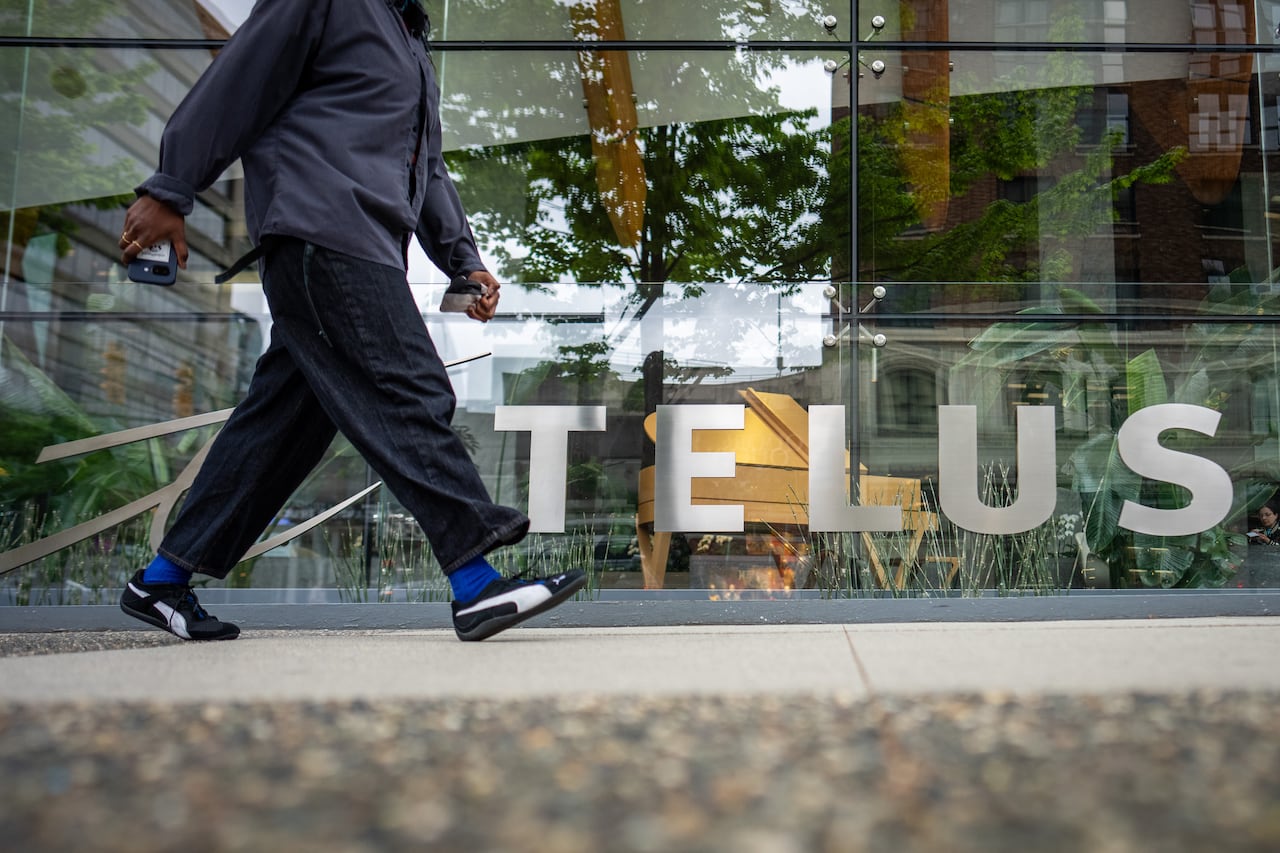
TELUS corporation’s headquarters at TELUS Garden in downtown Vancouver, British Columbia, on Wednesday, May 6, 2026. Telus’ board is considering the proposal from Quebecor, but says it has concerns that remain unanswered by the Montreal-based telecom company. (Ben Nelms/CBC)
Telus has established a committee to evaluate the offer and ascertain the potential deal’s value. Thus far, the committee has identified several “significant risks,” according to John Manley, chair of Telus’s board of directors.
Manley stated, “Quebecor has yet to clarify how its proposal could gain approval within the existing telecommunications regulatory framework in Canada, and that a regulatory review of such a transaction would impose a lengthy and costly process on our shareholders.”
Telus also questions how Quebecor’s proposal assesses the company’s value.
Manley further noted that Telus intends to engage with Quebecor, governmental bodies, and regulatory authorities regarding these concerns while exploring alternative options.

Quebecor announced that it has engaged experts to evaluate the proposed acquisition and address any issues that regulatory authorities might raise. The company is also prepared to discuss “measurable commitments” regarding pricing, employment, and regional connectivity with those authorities, as mentioned in its release.
‘A way bigger deal than the Rogers-Shaw deal’
This potential acquisition could represent a significant upheaval in the telecommunications industry and would be the largest takeover in Canada’s telecom sector since Rogers Communications Inc. acquired Shaw in 2023. This previous merger was authorized by the federal government under several conditions, including mandates for Rogers to invest billions to enhance its broadband and wireless networks and create 3,000 jobs in Western Canada.
As part of that acquisition, Shaw’s Freedom Mobile was sold to Quebecor’s Videotron, which was required to provide lower-cost services similar to those offered in Quebec in other regions, among other stipulations.
This arrangement allowed Quebecor to gain substantial business in Ontario and Western Canada, significantly increasing its presence in the Canadian market, according to Dwayne Winseck, a communications professor at Carleton University and director of the Global Media and Internet Concentration Project.
Rogers is set to take over Shaw after the federal government approved the merger with conditions which it insists will make the deal good for consumers. But some are skeptical the merger will actually be good for their wallets.
For nearly two decades, the federal government has been striving to bolster competition in the telecommunications industry by advocating for the emergence of a fourth competitor, according to Winseck.
Given Quebecor’s expansion following its acquisition of Freedom, he states that permitting the merger now would contradict the government’s efforts and diminish competition within the telecom market.
“This is a deal that Canada doesn’t need,” Winseck asserted. “I just can’t envision it yielding any positive outcomes.”
Despite a decrease in mobile wireless service prices in Canada in recent years and the introduction of more affordable options, wireless costs rose again in 2025, and Canada still ranks among the highest in wireless pricing compared to other developed nations, according to Canada’s annual telecom price report.
Winseck believes that the limited advancements made in making wireless connectivity more affordable would be negated if Quebecor is permitted to acquire Telus. Consequently, he anticipates that the Competition Bureau will not sanction the deal.
“This is a much larger deal than the Rogers-Shaw acquisition,” Winseck remarked.

Cellphone users in Ireland, France and Australia react to cost-per-gigabyte price differences in Canada.
On the other hand, Péladeau asserts that his company has contributed to lowering prices in the years following Quebecor’s acquisition of Freedom and maintains that Quebecor would “continue this trend” to benefit consumers if the merger proceeds.
Jennifer Quaid, an expert in competition law and a professor at the University of Ottawa, states that any prospective deal must be evaluated based on its specifics rather than generalizations.
While the overall concern about competition within the telecom sector exists, Quaid explained to CBC News that it will be the responsibility of the Competition Bureau to analyze regional markets to assess how it would influence competition locally.
“It is likely that in certain areas, Quebecor will have the ability to exert more influence to increase prices. The question will be whether that is sufficient to derail the deal?”
She also emphasized that the proposal is still in its early stages. Quebecor must persuade Telus’s board to accept the agreement before presenting its benefits to the Competition Bureau, which Quaid notes means the deal is “not a certainty at all.”