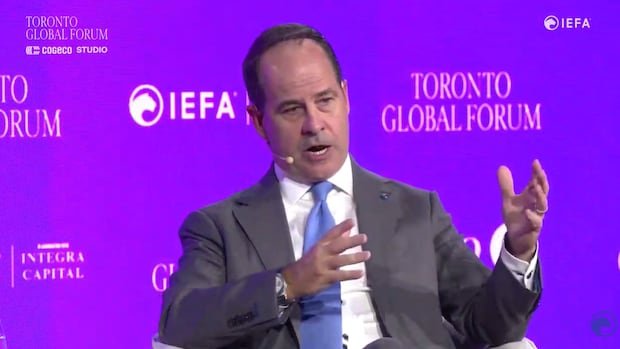
Bank of Montreal’s CEO, Darryl White, has voiced concerns about the security of personal banking information in the hands of artificial intelligence agents. White, speaking at the Toronto Global Forum, highlighted the rapid advancement of AI technology, outpacing regulatory frameworks and protective measures. His remarks echoed recent comments made by RBC’s CEO, who hinted at the possibility of blocking Meta’s Muse AI agent from accessing client data at his bank.
White emphasized the importance of caution, stating that people have become too comfortable sharing personal information with various agents in the e-commerce system over the past 25 years. He warned against divulging sensitive details such as banking usernames, passwords, credit card information, social insurance numbers, and PINs, as these are not adequately protected. White stressed the need for increased public awareness and education on data security.
Canada’s major banks have heavily invested in AI technology in recent years. White highlighted BMO’s insurance division, which now utilizes AI to expedite underwriting decisions, reducing the process from 28 days to just 10 seconds. Meanwhile, other banking institutions, including JPMorgan Chase & Co. and Charles Schwab, have taken steps to block or restrict external AI agents from accessing client data to safeguard privacy and security.
AI agents like Meta’s Muse and OpenAI’s ChatGPT can assist with financial monitoring by connecting to bank accounts and credit cards with client authorization. These agents can provide insights on spending habits and offer financial advice, although human approval is typically required for transactions. RBC’s CEO, Dave McKay, revealed that the bank is contemplating restricting Muse’s access to client information to strike a balance between customer needs and data security.
As the debate continues on the role of AI agents in banking, industry leaders are grappling with the challenge of maintaining consumer trust while ensuring robust privacy protections.