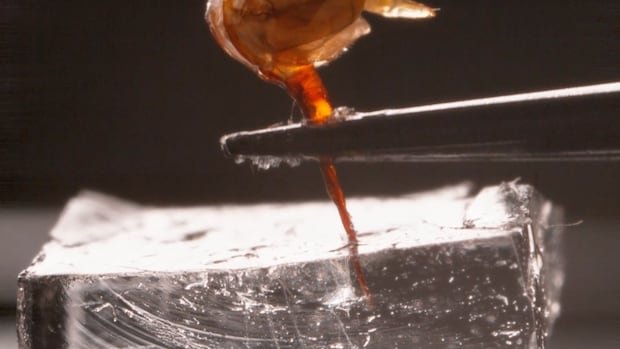
A western honey bee’s stinger is a last-resort weapon that injects venom into flesh, often leading to the bee’s death. Recent research in the Proceedings of the National Academy of Sciences is shedding light on the effectiveness of this defense mechanism. Fiorella Ramirez Esquivel, the lead author and postdoctoral researcher at Macquarie University in Australia, emphasized the significance of filming the bees in action, made possible by modern high-speed cameras.
To capture the rapid bee stings, Ramirez Esquivel and her team utilized cameras capable of recording hundreds of frames per second. The transparency of the venom sac and stinger allowed for enhanced visualization through strong lighting. The experiments involved live honey bees, where the stingers were removed and the bees were promptly euthanized due to the stinger’s short active duration post-separation.
The study revealed a unique double-piston design in the stinger, with specialized valves facilitating the stinger’s penetration and continuous venom delivery. The intricate mechanism involves the valves moving past each other to ensure a consistent flow of venom. The researchers used 3D printing to replicate this movement for further analysis.
Juliana Rangel, an apiculture professor at Texas A&M University, found the study’s videos intriguing, providing insights beyond traditional microscopic images. The research highlighted the stinging behavior’s evolutionary significance, showcasing the honey bee’s sacrifice for the colony’s defense. Honey bee stingers not only embed in the target but also release pheromones to attract other bees for collective defense.
The study’s findings suggest that the stinger’s barbs and continuous penetration enhance the defense mechanism’s efficacy. Despite occasional limitations against tougher skin or fur, the stinging apparatus serves a crucial role in protecting the hive. The research may have implications beyond bee biology, potentially influencing medical applications.
The study also prompts questions about other honey-producing bee species, especially those native to the Americas, that differ in stinging behavior. Lauren Ponisio, an ecologist at the University of Oregon, reflects on the evolutionary variations among honey-producing bees and the absence of stingers in some species, raising intriguing inquiries into their survival strategies.


