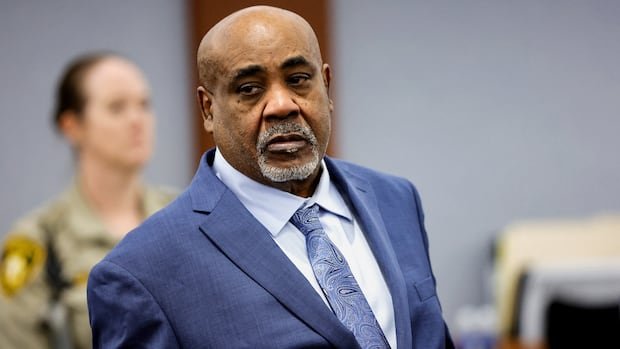
A former leader of a street gang was accused of masterminding the 1996 drive-by shooting of hip-hop icon Tupac Shakur in Las Vegas as payback for an incident involving his nephew, a prosecutor revealed during the initial statements in a murder trial linked to an old unsolved crime that left a significant mark on rap culture.
Duane (Keffe D) Davis, aged 63, faces a single murder charge using a lethal weapon in Clark County, Nevada. He pleaded not guilty to orchestrating the killing of Shakur, a prominent figure in the rap scene, who was gunned down in a drive-by shooting near the Las Vegas Strip at the age of 25.
The prosecutor, Binu Palal, informed the jury in a Las Vegas courthouse that Davis ensured the shooters were armed and prepared to carry out the attack when the opportunity for revenge arose. Palal highlighted recent public statements made by Davis, confessing his involvement in the long-dormant case.
Defense attorney Michael Sanft argued that despite 30 years passing, investigators lack substantial evidence to support their case against Davis. Sanft dismissed Davis’s claims as unreliable, emphasizing the lack of factual support for his statements in interviews and his book.
The murder of Shakur intensified the perception of violence within hip-hop culture, particularly during the peak of “gangsta” rap, fueling the East Coast-West Coast rap rivalry of that era.
Law enforcement officials mentioned that Davis had long been a suspect in the murder, but the case gained traction only after his self-incriminating public remarks in 2023. The trial, presided over by Judge Carli Kierny, is anticipated to last up to six weeks, with potential testimony from Marion (Suge) Knight, co-founder of Death Row Records and an eyewitness to Shakur’s killing.
Authorities described Davis as the instigator of a swift plan to avenge his nephew’s beating by Shakur and his entourage at the MGM Grand casino in Las Vegas on the night of September 7, 1996. The altercation reportedly stemmed from tensions between two Los Angeles street gangs, the South Side Compton Crips led by Davis and Mob Piru associated with Knight and Death Row Records, coinciding with a boxing match in Las Vegas.
Allegedly, Davis procured the murder weapon and passed it to two individuals in a white Cadillac to track down Knight and Shakur’s vehicle after the casino altercation. The fatal shooting occurred when they caught up with the victims’ car, resulting in Shakur’s death and Knight’s minor injury.
Davis’s public revelations in 2018 reignited the cold case, with his accounts in media interviews and his book, “Compton Street Legend,” shedding light on his involvement in the shooting. However, the identity of the actual shooter remains undisclosed, as the other individuals in the Cadillac have since passed away.
Under Nevada law, Davis could be held liable for murder even without directly pulling the trigger if he participated in the crime. The trial holds significance for Tupac fans like O’Ron Gordy, who expressed a desire for closure while acknowledging the uncertainties surrounding the case. Davis also hinted at his long-standing implication in the murders of Shakur and another rapper, Christopher Wallace, whose death in 1997 remains unsolved but is speculated to be linked to Shakur’s killing.
Overall, the trial marks a pivotal moment in rap history, revisiting a tragic incident that reverberated throughout the music world and beyond.