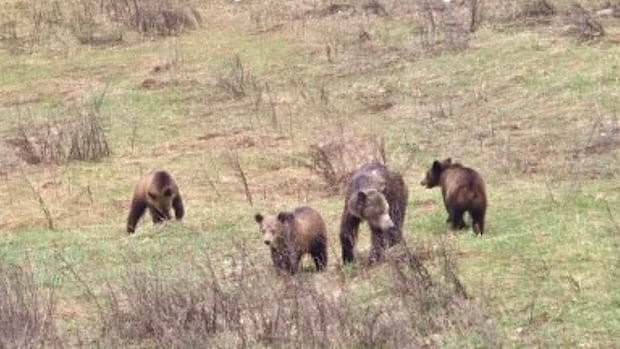
In an official statement released on August 14, the B.C. Conservation Officer Service announced that the decision had been made to euthanize the mother grizzly bear due to concerns over public safety. This action was taken after the bear displayed behavior associated with seeking food and showed a lack of fear towards humans. The two remaining yearlings from the family were safely relocated to an undisclosed location for continued monitoring.
A demonstration occurred in Nelson, B.C., on Thursday to express opposition to the killing of a young grizzly bear by the B.C. Conservation Officer Service. This bear was part of one of two grizzly families frequently observed in and around Nelson.
Katie Graves, the founder of the non-profit Ursa Project Society, described the emotional scene at the rally, highlighting the shared sorrow and support among participants. The bear in question, identified as a yearling with a leg injury or deformity, was perceived by Graves as unjustly targeted for euthanasia. She emphasized that the bear was still mobile, keeping pace with its family and able to forage effectively.
The B.C. Conservation Officer Service justified its decision in a statement issued on Wednesday, citing the bear’s age, injury, and past conflicts as factors that rendered it unsuitable for rehabilitation or relocation. The service acknowledged the difficulty of such decisions, emphasizing the necessity of ensuring public safety in dealing with injured, sick, or conflict-prone bears.
Regarding the mother bear’s history, Graves noted that she had previously been relocated after bringing cubs to the area in 2023, only to return shortly afterward. While the service has not provided updates on the status of the other grizzlies—a sow and two yearlings—it assured that any captured bears would be evaluated to determine the appropriate course of action.
The incident sparked a significant response on social media platforms, with many expressing criticism towards the decision to euthanize the grizzly bear. Community members acknowledged the challenges faced by conservation officers in balancing public safety and wildlife preservation, with a consensus emerging on the importance of improving waste management practices to mitigate human-bear conflicts.
Wildlife biologist Clayton Lamb stressed the need for stronger policies at the provincial and municipal levels to minimize attractants that draw bears into urban areas. Lamb underscored the difficulty of rehabilitating habituated or food-conditioned bears, emphasizing the inherent risks associated with bears becoming comfortable in human-populated spaces. Managing attractants effectively, Lamb argued, is crucial for preventing future bear incursions into residential areas.
The City of Nelson released a statement affirming its commitment to reducing conflict and preserving the wild nature of bears. Initiatives include the installation of bear-resistant garbage cans, public education programs, and enforcement of waste management regulations to deter bears from becoming accustomed to human-provided food sources.