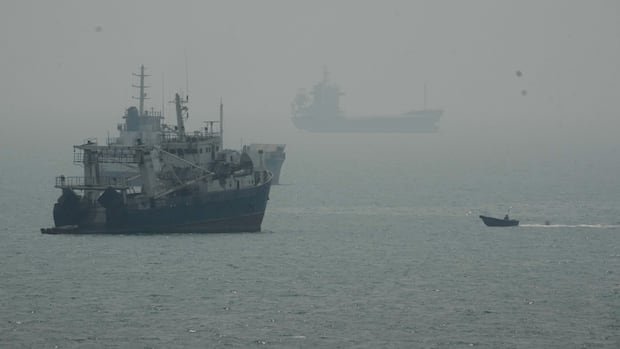
Iran confirmed on Wednesday that it had launched an attack on 10 ships near the Strait of Hormuz following the destruction of five Iranian oil tankers by the U.S. This exchange marked a significant escalation in maritime hostilities between the two sides since the onset of the six-month-long conflict. The Islamic Revolutionary Guard Corps (IRGC) of Iran retaliated by targeting a U.S. base near Al Azraq in eastern Jordan with ballistic missiles. Additionally, they engaged in firing at two U.S. vessels and eight oil tankers that were attempting to traverse a restricted area in the Strait of Hormuz that had been designated by Iran.
The series of attacks in and around the crucial waterway led to a spike in oil prices, with the international Brent crude benchmark surpassing $100 per barrel for the first time since July. The fluctuating oil prices have been influenced by various factors, including the ongoing war, disruptions in Saudi Arabia due to clashes with Iran-aligned Houthis in Yemen, and the impact on global energy markets. The conflict has not only affected oil prices but has also caused significant economic strain on American consumers, particularly evident in the rising costs of gasoline at the pumps.
Gasoline prices in the U.S. have surged, with a gallon of regular gasoline averaging $4.15 on Tuesday, marking a 26% increase from the previous year. Diesel prices have also risen substantially, reaching $5.90 per gallon, reflecting a 59% surge compared to the same day in the previous year. The escalating tensions have cast uncertainty on the possibility of a lasting resolution before the upcoming U.S. midterm elections, as highlighted by analysts from Bank of America.
Similarly, gas prices across Canada have seen a noticeable uptick since the conflict began, with hikes ranging between 25% and 40% in various regions. In response to the escalating prices, the Canadian government announced an extension of the gas tax holiday until the end of January to alleviate the financial burden on consumers.
As the situation continues to unfold, Iran disclosed the establishment of a restricted maritime zone extending from Chabahar in Iran into parts of the Gulf of Oman and the Arabian Sea. The specific coordinates of this restricted area were set to be announced. Concurrently, reports emerged of a drone striking a tanker carrying Iraqi fuel oil in Iraqi territorial waters, causing a fire on board. The United Kingdom Maritime Trade Operations agency reported disabling fire incidents on vessels in the northern Gulf and Gulf of Oman during military activities in the region.
The Strait of Hormuz, a critical transit route for global oil supply, has witnessed disruptions due to the conflict, impacting the flow of oil, natural gas, and other essential resources. In response, the U.S. has enforced a military blockade of Iranian ports to counter Iran’s actions in the region. The ongoing tensions have also resulted in a reduction in the number of ships passing through the strait, indicating the operational challenges faced by maritime traffic in the area.