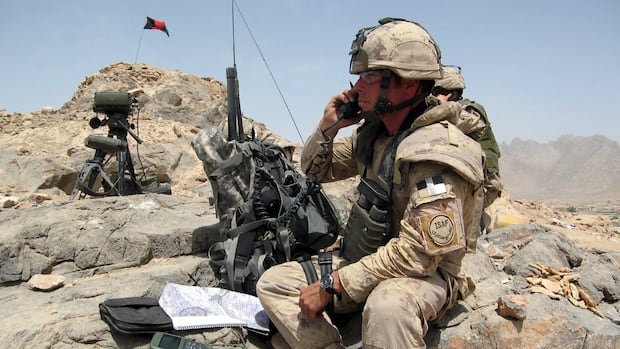
As Canadian forces advanced across the Arghandab River, former corporal Bruce Moncur sensed trouble when he spotted a green pen flare in the sky, a signal typically associated with the Taliban. This marked the beginning of a three-sided ambush that caught him and his fellow troops off guard after they had disembarked from their armored vehicles.
Recalling the events of that fateful day 20 years ago, Moncur vividly remembers the intense battle that unfolded as part of Operation Medusa in the vineyards and villages of Kandahar. The operation commenced with a heavy artillery and air assault on September 2, 2006, followed by his unit’s crossing of the river the next day.
They encountered a well-prepared enemy entrenched in the area, engaging them with machine guns, rocket-propelled grenades, and small arms. Unlike previous encounters, the Taliban fighters chose to stand their ground and fight back, leading to a grueling five-hour firefight.
Over 2,000 NATO troops, including more than 1,000 Canadians, participated in the operation, alongside Afghan and other allied forces. This engagement marked the largest battle Canadian forces had faced since the Korean War and their most significant conventional operation during the Afghan conflict.
Moncur’s unit, Charles Company, 1st Battalion Royal Canadian Regiment (1RCR), found themselves ensnared in the insurgent ambush as they advanced towards their target, a schoolhouse occupied by the Taliban. The intense confrontation resulted in the deaths of four Canadian soldiers and injuries to 16 others before the order to retreat was given.
Reflecting on the fierce resistance encountered, Moncur highlighted the unexpected strength and determination of the estimated 1,000 Taliban fighters they faced. The insurgents had amassed in the Panjwai and Zhari districts, strategically positioned to challenge the newly deployed NATO forces in southern Afghanistan.
The operation also faced a tragic incident of friendly fire when an American A-10 mistakenly attacked Canadian positions, resulting in casualties, including Moncur who suffered a severe head injury. Despite the chaos and injuries, Moncur managed to survive and was evacuated for medical treatment.
The aftermath of Operation Medusa saw the Taliban’s support structure in Pakistan exposed to a significant extent, prompting debates about external influences on the insurgents’ tactics and capabilities. The operation’s success in repelling the Taliban’s advance marked a crucial turning point in the conflict, forcing the insurgents to revert to hit-and-run tactics rather than pursuing a direct assault on Kandahar city.
The courage and sacrifice displayed by Canadian forces during Operation Medusa left a lasting impact on the Afghan war, demonstrating their willingness to stand alongside the Afghan people in the face of adversity.