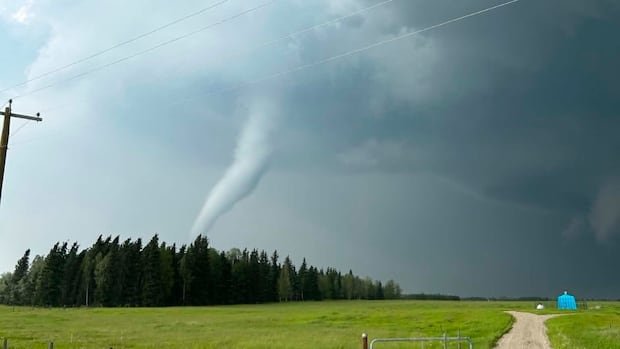
Environment and Climate Change Canada (ECCC) has enhanced its warning system for tornadoes and severe thunderstorms to offer more precise alerts regarding severe weather conditions.
Through the Convective Alert Modernization (CAM) system, forecasters now have the capability to issue alerts targeting specific areas most susceptible to extreme weather events. ECCC has confirmed to CBC Thunder Bay that the updated system is operational.
According to ECCC, forecasters can delineate the warning area based on the anticipated threat location, utilizing ‘free-form polygons’ to define alert areas. Presently, targeted alert areas are exclusively utilized for severe thunderstorm and tornado warnings, while other weather alerts continue to be disseminated to predetermined zone-based areas.
By employing streamlined and automated processes, forecasters can furnish Canadians with more accurate and actionable information swiftly, especially in critical situations where time is of the essence.
In the previous system, storm warnings were issued for larger, pre-defined alert zones, potentially resulting in individuals receiving warnings about tornadoes or severe thunderstorms that might not impact them directly.
David Sills, the director of the Northern Tornadoes Project at Western University in London, Ont., commended the adoption of the polygon system by Environment Canada. Sills explained that this approach, already in use in the United States since 2007, enables warnings based on meteorological data and the actual trajectory of the storm, ensuring that alerts are directed to those directly affected.
However, Sills raised a concern regarding the delivery of targeted alerts, noting that they will currently be accessible through mobile networks and the WeatherCAN app, while radio and television alerts will continue to follow the old system due to the extensive broadcast regions.
Sills emphasized that the new system has proven effective in reducing false alarms in the United States. Notably, red tornado warnings were issued for parts of northwestern Ontario this summer, including the Kenora, Sioux Narrows, Dryden, and Vermilion Bay areas during severe thunderstorms potentially producing tornadoes.
Gordon Howard, Kenora’s director of emergency services, expressed satisfaction with the upgraded warning system, emphasizing the importance of maintaining public trust by issuing alerts only when necessary to prevent alert fatigue and promote public safety. Howard highlighted the delicate balance between providing sufficient warning and avoiding unnecessary alerts in emergency notification systems.