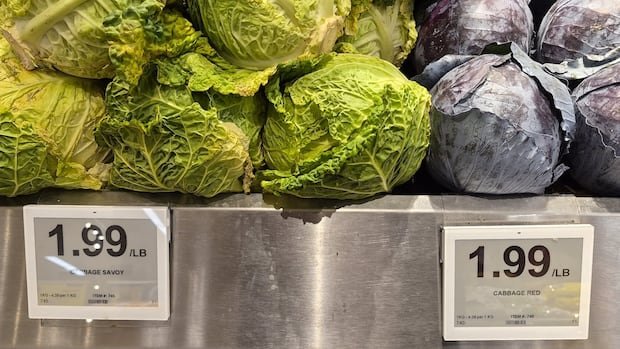
Loblaw has decided to reinstate country-of-origin labels on produce signs in response to significant customer dissatisfaction. The controversy arose when shoppers noticed that the information indicating where the food was grown was missing from produce displays.
Karla Hennig from Penticton, B.C., a dedicated supporter of Canadian products, expressed disappointment at the absence of origin details at her local Superstore, emphasizing the importance of transparency in food labeling. She criticized the decision, stating that it was disrespectful to consumers who expect clear information on the products they purchase.
While Loblaw had initially removed country-of-origin labels from produce signs in most of its stores, they continued to provide this information in Ontario and Quebec due to provincial regulations. The abrupt policy change coincided with the breakdown of Canada-U.S. trade talks, leading to renewed interest in supporting Canadian goods.
Customers across Canada, including Edmonton resident Karl Mueller, were quick to voice their objections on social media platforms. Mueller, who noticed the lack of labeling at his local Real Canadian Superstore, expressed his disappointment and emphasized the importance of supporting local businesses, especially during times of economic uncertainty.
Agricultural economist Ellen Goddard, foreseeing a possible reversal of the decision by Loblaw, highlighted the heightened emotional response from consumers. True to her prediction, following inquiries from CBC News, Loblaw announced its decision to reintroduce country-of-origin information on produce displays to facilitate customers in choosing Canadian products.
While some shoppers cautiously welcomed the news of Loblaw’s policy change, others, like Mueller, emphasized the influence ordinary individuals can have by supporting local businesses. Mueller stressed the significance of consumers aligning their purchasing decisions with their values to make a positive impact.
Despite initially defending its decision based on sourcing challenges, Loblaw faced criticism for its lack of transparency. The grocer clarified that shoppers could find country-of-origin details on individual produce stickers or ask store employees for information. However, some customers, like Hennig, expressed frustration at the lack of clear labeling and the inability of store staff to provide the necessary information.
The change in Loblaw’s labeling policy was influenced by regulatory issues, including fines imposed by the Canadian Food Inspection Agency for incorrectly promoting imported food as Canadian. The grocer’s decision to remove country-of-origin signage for produce was likely a response to the negative publicity and the importance of maintaining customer trust in the industry.
In light of the regulatory scrutiny faced by grocers, Loblaw’s decision to reinstate country-of-origin labeling aligns with consumer expectations for transparency in food labeling. The move reflects a broader trend in the industry, with other retailers, such as Sobeys, also adjusting their labeling practices in response to regulatory concerns. Calls for new federal regulations mandating origin information for bulk produce reflect the growing demand for clearer labeling standards to benefit consumers.