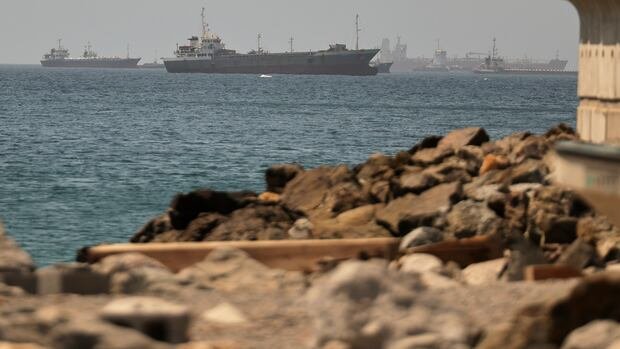
A recent study suggests that the standstill of ships in the Gulf region due to the closure of the Strait of Hormuz could lead to a significant environmental threat known as a “super-spreader” event. Algae, barnacles, tunicates, and other organisms attaching to idle vessels in the Persian Gulf and Gulf of Oman could pose a substantial biosecurity risk once the ships resume their journeys, as per the findings published in the journal “Biological Invasions.”
Lead researcher Mario Tamburri from the University of Maryland Center for Environmental Science highlighted the concerning potential of the current situation, estimating that approximately 1,500 ships are currently stranded in the Persian Gulf, with additional vessels stuck in the Gulf of Oman due to the U.S.-Iran conflict leading to the strait’s closure.
The accumulation of organisms on ships, a process known as biofouling, could facilitate the spread of invasive species to various ports worldwide if not managed effectively, the study warned. The extended period of inactivity for these vessels, coupled with the challenges of maintaining hull cleanliness, increases the risk of a “super-spreader” event.
Tamburri and his team emphasized the urgency of the situation, noting that hull coatings meant to prevent biofouling become less effective when ships are stationary for prolonged periods. The researchers underscored the difficulty in cleaning a large number of ships before they depart, citing safety concerns and logistical constraints.
The study also shed light on the ecological impact of biofouling, pointing out that while attention has been primarily focused on species transported through ballast water, organisms attaching to ships’ exteriors have received less consideration. The potential for invasive species to establish themselves in new ecosystems poses a significant threat to marine biodiversity and ecosystems.
Experts highlighted the need for stricter regulations and proactive measures to address biofouling risks, emphasizing the long-term ecological and economic consequences of invasive species introductions. The current situation in the Gulf region serves as a stark reminder of how geopolitical events can have far-reaching environmental implications, underscoring the importance of global cooperation in mitigating biosecurity threats in the maritime industry.