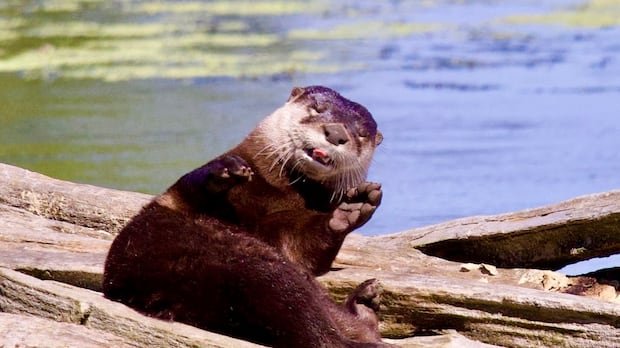
Wildlife enthusiast Terry Chettle was capturing images of a green heron at the Grimsby Wetlands in early August when he and the bird were both taken aback by an unexpected visitor. A river otter suddenly appeared, engaging in playful antics with the heron, much to Chettle’s surprise. The Beamsville, Ont., resident noted that otters are not commonly seen in the area, making this sighting a special moment. As the otter moved to a log and began grooming itself, Chettle seized the opportunity to photograph the charismatic creature as it posed, sticking its tongue out and waving.
On the same day, Bruce and Laurie Mackenzie were strolling through the wetland when they crossed paths with Chettle, who pointed out the otter to them. Bruce Mackenzie acknowledged the rarity of the find, mentioning that the sighting on Aug. 3 was likely the first in recent memory near the wetlands. According to Mackenzie, there have been no further reports of otter sightings in the area since that weekend. The wetlands, previously used by the Niagara Region for sewage disposal, are now managed by the Hamilton Naturalists’ Club and span approximately 12 hectares on Lake Ontario’s South Shore. Mackenzie, who is involved with the naturalists club and serves as the wetlands project manager, highlighted the positive impact of habitat restoration and water quality, citing previous sightings of rare species like least bitterns, which are threatened in Ontario.
Expressing excitement over the diversity of species appearing in the region, Mackenzie emphasized the significance of these sightings as indicators of successful wildlife conservation efforts in the Golden Horseshoe area. Laura Timms, a program manager at Credit Valley Conservation, hailed otters as a conservation triumph, noting their resurgence in the Credit River watershed, which encompasses parts of Mississauga and Peel Region. Timms highlighted the efforts to revitalize degraded environments, resulting in the rebound of otter populations in North America. She mentioned that sightings of otters, once mistaken for minks, have become more frequent, with documented reports including otters giving birth to offspring at conservation areas this year.
While the Niagara Peninsula Conservation Authority stated that it does not monitor wildlife populations, Timms emphasized the historical decline of river otters due to hunting, habitat destruction, and poor water quality in the 1800s. She underscored the ongoing need to restore and protect various habitats to ensure the thriving of all species and to witness more success stories akin to the otters’ resurgence.
River otters, which can reach lengths of up to 1.4 meters and weigh between five to 14 kilograms, are carnivorous creatures that inhabit rivers, lakes, and creeks. They feed on fish, clams, insects, and other aquatic animals, showcasing their adaptability to diverse aquatic ecosystems. Timms stressed the importance of conserving wetlands as vital habitats that support numerous species, store carbon, and mitigate flooding, underscoring the ongoing efforts required to safeguard biodiversity for the benefit of all species.