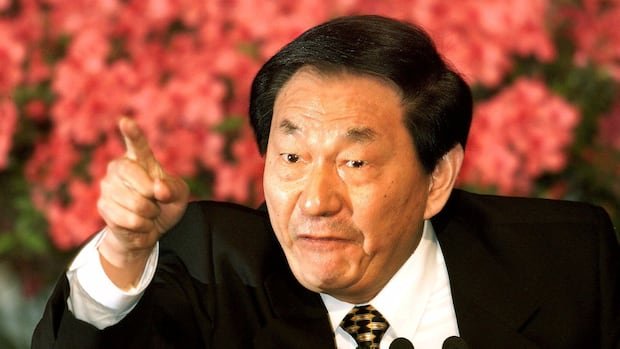
Former Chinese Prime Minister Zhu Rongji has passed away at the age of 97, as reported by state media. The official Xinhua news agency announced that Zhu succumbed to illness in Beijing around 11 a.m. on Wednesday. Known for his impatience and sharp-tongued approach, Zhu played a pivotal role in driving China’s economic growth in the 1990s by implementing significant reforms in the state industry and steering the country into the World Trade Organization.
Despite facing challenges earlier in his career, including being exiled to rural areas for supporting reforms in other communist nations, Zhu spearheaded a series of transformative changes during his tenure as premier from 1998 to 2003. His initiatives to enhance the efficiency and profitability of state-owned enterprises led to millions of job cuts but propelled China to become the world’s second-largest economy after the United States in 2010.
Building on Deng Xiaoping’s earlier reforms, Zhu was instrumental in crucial milestones such as China’s accession to the WTO, which played a vital role in positioning China as the leading global exporter. These efforts resulted in sustained economic growth, with China’s GDP expanding by over eight percent annually from 2000 to 2010, reaching a peak of 14.2 percent in 2007.
Zhu, who assumed office as premier at the age of 69, garnered public support for his firm stance against bureaucratic inefficiencies and corruption, earning the monikers “Boss” and “Madman Zhu.” His commitment to accountability was evident when he famously remarked in 1998 about preparing coffins for corrupt officials, including one for himself. Throughout his career, Zhu prioritized pushing through reforms to drive progress while maintaining government ownership in key sectors like banking and energy.
Born in Hunan province in 1928, Zhu’s career trajectory faced a setback in the late 1950s when he was labeled a “rightist” for advocating reforms. However, he made a remarkable comeback in 1979, swiftly rising through the political ranks to become a prominent figure. Zhu’s diplomatic skills and dedication to economic stability were evident during his tenure as mayor of Shanghai, where he defused tensions during political unrest in 1989.
Zhu’s legacy includes his instrumental role in securing China’s WTO membership through strategic negotiations and market-opening measures. Despite facing criticism and challenges, Zhu’s determination and leadership paved the way for China’s integration into the global trade community. His commitment to pushing economic reforms, fostering accountability, and driving growth has left a lasting impact on China’s political and economic landscape.
By implementing policies to promote home ownership and drive private sector growth, Zhu left an indelible mark on China’s economic evolution. His willingness to confront failures, admit mistakes, and prioritize the welfare of the public endeared him to the Chinese populace. Zhu’s tenure as a reformist leader and his unwavering dedication to advancing China’s economic prowess have solidified his place in the annals of Chinese history.